
Power when you need it. Simplicity when you do not.
DivisionDesk is designed for organizations that need a professional public website and serious operational tools without turning every administrator into a developer. Core handles shared platform responsibilities; installable packages add specialized capabilities.
Visual Page Builder
Build responsive pages from sections, columns, reusable blocks and package-provided elements while keeping everyday editing approachable.
Themes & Complete Sites
Separate content from presentation. Start from a complete editable Site Template, change Themes later, and keep the content you have already built.
Membership Manager
Manage member records, roles, scopes, dues information, imports, audits and operational views through a module built for structured organizations.
Documents & Forms
Store/search documents, work with fillable PDFs and webforms, extract supported text and use reviewable document-recognition workflows.
Core Events
Events is part of DivisionDesk Core: one-time and recurring events, public event information and integration points that other modules can extend.
Communications
Build communication workflows around audiences, preferences, delivery queues, templates and the messaging channels enabled for the organization.
Finance & Payments
Connect dues, statements, donations/payments, allocations and organization-aware financial workflows without forcing finance concerns into Core.
APIs & SDKs
Client installations, Server modules and external integrations communicate through documented contracts rather than by sharing private application state.
Package Updates
Core and Store packages are independently versioned. Compatibility, dependencies, lifecycle and entitlements are resolved before delivery.
Version-aware Help
Core and modules can ship maintained Help topics with releases so the public Help Library stays connected to the software that introduced the feature.
Accessibility Controls
Public accessibility tools include contrast/text preferences and reduced-motion support while administration is designed for clear navigation and keyboard use.
Knowledge Services
Analyze supported documents and workflows with reviewable results. Smart features are intended to assist administrators, not silently replace judgment.
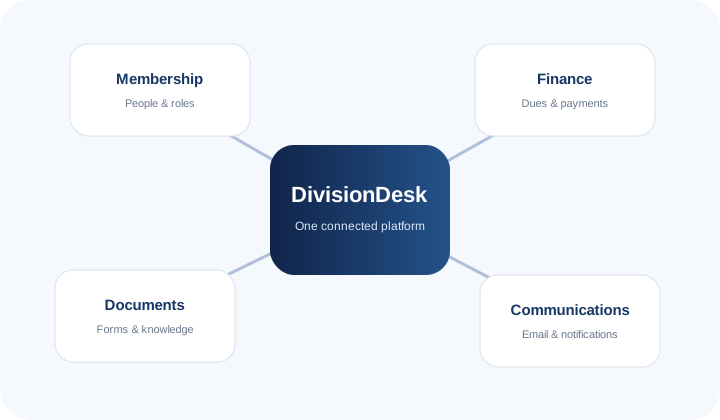
Administration shows the tools that belong to the job.
A webmaster, membership officer, communications chairman, financial officer and division administrator may have completely different responsibilities. DivisionDesk combines role capabilities, organizational scope and installed-package registration so administrative interfaces can expose appropriate tools without showing everything to everyone.
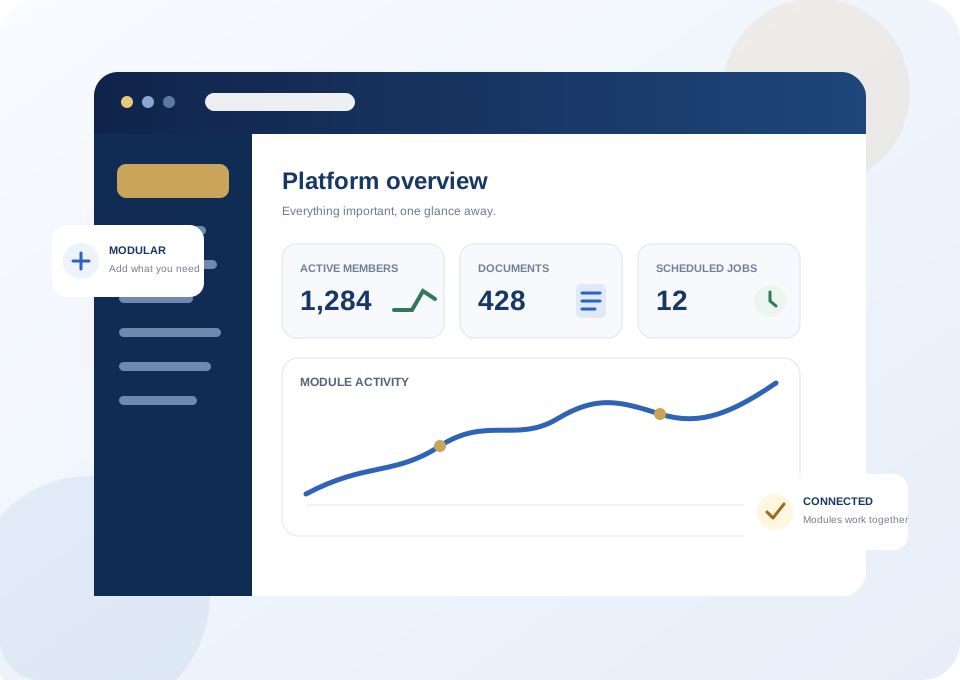
Core stays focused while the platform expands.
Modules provide major capabilities. Widgets provide reusable page output. Widget Packs distribute coordinated groups of widgets. Themes handle visual design. Site Templates provide complete editable sites. Page Layouts provide reusable page structures. Each package family can evolve independently through the DivisionDesk Store.
DivisionDesk Server supports the installations after deployment.
The Server is more than a download host. It provides Store publishing and delivery, licensing and entitlement state, release resolution, Help, Community, Feature Requests, support conversations, scheduled operations, knowledge services and centralized provider integrations such as Social OAuth.
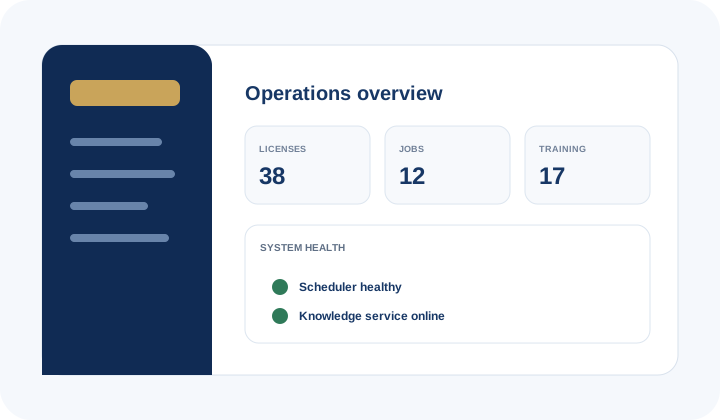
Designed for real organizational workflows
DivisionDesk is intended to replace disconnected website plugins, spreadsheets and one-purpose services with coordinated, permission-aware workflows.
Website teams
Publish pages, articles, forms, events and reusable content while changing themes/layouts independently from the underlying information.
Membership and officers
Work with structured records and scoped responsibilities without giving every administrator access to the whole system.
Communications and outreach
Connect site publishing, email/social workflows, public conversations and analytics through documented module/platform interfaces.
Developers
Build Modules, Themes, Widgets, Widget Packs, Site Templates and Page Layouts against documented manifests, APIs and SDKs rather than private internals.
Need a specific answer?
Search maintained documentation, browse public customer discussions, or follow product suggestions through the Feature Requests system.